
Depression Cake is my kind of pantry dessert: a soft chocolate cake made without eggs, milk, or butter in the batter. You stir everything together in one bowl, pour it into a square pan, and let the oven do the rest. For this version, a creamy chocolate frosting with a little honey makes it feel extra special. If you love simple cakes that do not require a long shopping list, this old-fashioned favorite is a lovely one to keep handy.
Pan size: 8×8 inches. Oven temperature: 350°F. Baking time: 30 to 35 minutes, plus cooling time before frosting.
What Is Depression Cake?
Depression Cake, also called Wacky Cake or Crazy Cake, is a chocolate cake made with basic pantry ingredients. Instead of eggs and dairy, the batter uses oil, water, vinegar, and baking soda. The vinegar reacts with the baking soda to help the cake rise. Despite its short ingredient list, the result is tender and chocolatey. This particular version includes a butter-based chocolate frosting, so the finished frosted cake contains dairy even though the cake itself does not.
What You Will Need to Make It
One thing I appreciate about this recipe is how little preparation it needs. There are no eggs to bring to room temperature and no butter to soften for the batter. You only need softened butter when you reach the frosting. Gather your ingredients, a large mixing bowl, a whisk or spatula, and an 8×8-inch baking pan.
For the Chocolate Cake
- 1 1/2 cups (187 g) all-purpose flour: Gives the cake its structure. Spoon the flour into your measuring cup and level it, or use a kitchen scale.
- 1 cup (200 g) granulated sugar: Sweetens the cake and contributes to a soft crumb. Keep the stated amount for the intended texture.
- 1/4 cup (29.5 g) unsweetened cocoa powder: Gives the batter its chocolate flavor. Natural unsweetened cocoa is a straightforward choice here; avoid sweetened drinking chocolate.
- 1/2 teaspoon kosher salt: Balances the sweetness. Kosher salt crystal sizes vary between brands, so use the same brand consistently when measuring by volume.
- 1 teaspoon baking soda: Works with the vinegar to help the batter rise. Do not replace it directly with the same amount of baking powder.
- 1 teaspoon vanilla extract: Adds a warm flavor alongside the cocoa.
- 1 teaspoon white vinegar: A small but useful ingredient that reacts with the baking soda. Apple cider vinegar is a practical substitute.
- 1/3 cup vegetable oil: Keeps the cake tender. Choose a neutral oil, such as canola, if you need an alternative.
- 1 cup (237 g) water: Provides the liquid for the batter. Plain drinking water is all you need.
For the Chocolate Frosting
- 3 tablespoons unsalted butter, softened: Forms the base of the frosting. It should be soft enough to mix easily but not melted.
- 3 tablespoons unsweetened cocoa powder: Adds chocolate flavor to the topping. Break up any noticeable lumps before mixing.
- 1 tablespoon honey: Adds sweetness and a subtle honey note. It also gives this frosting a slightly different flavor from a plain chocolate buttercream.
- 1 teaspoon vanilla extract: Rounds out the chocolate flavor.
- 1 cup (125 g) confectioners’ sugar: Also called powdered sugar. Sift it if it looks lumpy.
- 3 tablespoons whole milk or heavy cream: Add gradually to reach a spreadable consistency. You may need less, or a little more.
How to Make Depression Cake Step by Step
1. Prepare the Oven and Pan
Preheat your oven to 350°F. Line an 8×8-inch baking pan with parchment paper or coat it with nonstick cooking spray. If using parchment, leave a little overhang on two sides so you can lift the cooled cake out more easily. Otherwise, you can frost and serve it directly from the pan.
2. Whisk the Dry Ingredients
Combine the flour, sugar, cocoa powder, kosher salt, and baking soda in a large bowl. Whisk until everything is evenly mixed. Pay attention to any cocoa lumps, since they are easier to break up now than after adding the liquid.
This step also distributes the baking soda throughout the flour. That helps the batter rise more evenly instead of leaving concentrated pockets in the cake. You do not need a mixer for this part; a regular whisk works well.
3. Stir in the Wet Ingredients
Add the vanilla extract, white vinegar, vegetable oil, and water to the dry mixture. Stir with a spatula or whisk until the ingredients are fully combined and no dry flour remains. Scrape the bottom and sides of the bowl as you mix.
Once the batter is smooth, stop stirring. There is no need to beat it for several minutes. Have your prepared pan ready so you can pour the batter and bake promptly after combining the vinegar and baking soda.
4. Bake Until Just Done
Pour the batter into the prepared pan and spread it evenly into the corners. Bake for 30 to 35 minutes. Start checking at 30 minutes, especially if your oven tends to run hot.
Insert a toothpick into the center. The cake is ready when it comes out with a few moist crumbs, rather than wet batter. You do not need to wait for a completely clean toothpick, which can mean the cake has baked longer than necessary. The center should also look set.
5. Let the Cake Cool
Place the pan on a cooling rack and let the cake cool completely before frosting. You can prepare the topping while it cools, but wait to spread it. Warm cake can melt the butter in the frosting and turn a creamy topping into a runny layer.
6. Mix the Chocolate Frosting
Place the softened butter, cocoa powder, honey, vanilla, and confectioners’ sugar in a mixing bowl. Using a hand mixer, mix on low for about 30 seconds to begin combining everything. Starting slowly keeps the powdered sugar and cocoa from flying out of the bowl.
Next, add the milk or heavy cream one tablespoon at a time, mixing between additions. Check the texture before adding more. The frosting should be smooth and easy to spread, with enough body to stay on the cake. You may not need all 3 tablespoons, or you may need a little extra.
7. Frost and Slice
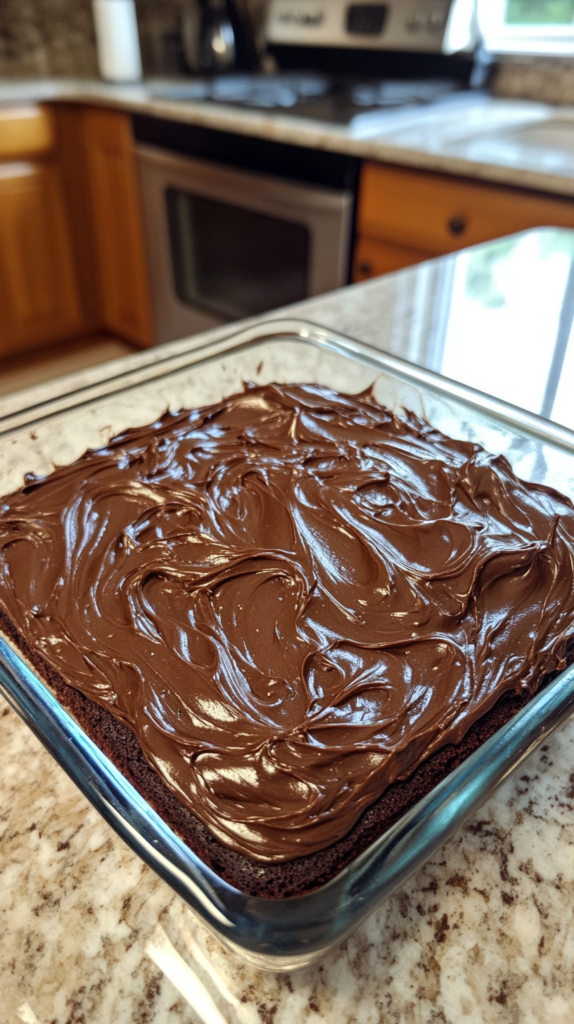
Spread the frosting over the completely cooled cake. Use a small spatula or the back of a spoon to make gentle swirls. There is no need for a perfectly flat finish. Slice into squares and serve directly from the pan, or lift the cake out first if you used parchment paper.
Simple Ways to Serve Wacky Cake
I would happily serve a square with coffee, tea, or a cold glass of milk. For a little contrast, add fresh strawberries or raspberries beside it. A scoop of vanilla ice cream also works beautifully if you want a richer dessert. For a simpler finish, skip the frosting and dust the cooled cake with powdered sugar just before serving. That option also keeps the cake free from dairy ingredients.
Tips for a Soft, Chocolatey Cake
- Measure the flour gently: Scooping straight from the bag can pack too much into the cup and make the cake dry.
- Check your baking soda: An old or poorly stored container may not give the batter enough lift.
- Keep the vinegar in the recipe: Its small amount has a purpose, even though you are not aiming for a vinegar flavor.
- Use the correct pan size: A larger pan makes a thinner cake that may bake faster.
- Watch for moist crumbs: Check the center instead of relying only on the baking time.
- Cool before frosting: Give the cake enough time so the topping stays creamy.
- Add frosting liquid slowly: It is easier to thin a thick frosting than to correct one that has become too runny.
- Keep the decoration simple: Soft frosting swirls suit this easy square cake perfectly.
Questions About Depression Cake
Why does this cake not need eggs?
This recipe is built around a different combination of ingredients. The flour provides structure, the oil contributes tenderness, and the baking soda reacts with vinegar to help the cake rise. Because the quantities are designed to work together, you do not need to add eggs or an egg replacement. Follow the recipe as written for the intended result.
Is Depression Cake vegan?
The cake batter uses no eggs or dairy and is generally suitable for a vegan dessert when your ingredients meet those needs. However, this frosting contains butter, milk or cream, and honey, so the finished recipe is not vegan as written. For a vegan option, serve the cake plain or use a suitable vegan chocolate frosting. Check ingredient labels when baking for dietary requirements.
Can I make it ahead, and how should I store it?
Yes. Bake the cake the day before serving, let it cool completely, and cover it well. You can frost it later or refrigerate the finished cake, covered, and enjoy it within 3 days for the best texture. Let refrigerated slices stand briefly before serving so the butter-based frosting softens a little.
For longer preparation ahead, freeze the unfrosted cake once completely cool. Wrap it tightly and thaw it while still wrapped before adding fresh frosting. Keeping the topping separate makes it easier to preserve the cake’s simple, soft texture.
How can I fix frosting that is too thick or too thin?
If it is too thick, add milk or cream a teaspoon at a time until it spreads easily. If it is too thin, first check whether the butter has become warm. A short chill may help. If it still needs more body, mix in a little sifted confectioners’ sugar. Make small adjustments, since extra sugar also changes the sweetness.
Why This Recipe Is Worth Keeping
Depression Cake offers plenty of chocolate flavor with everyday ingredients and very little equipment. The batter comes together in one bowl, and the square pan makes serving easy. You can keep it plain for a simple pantry cake or add the honey chocolate frosting for a richer finish. It is a practical recipe for home bakers who want a homemade dessert without a long list of steps.
A Small Detail I Love About This Cake
My favorite part of this recipe is how little decoration it needs. A square cake with soft chocolate frosting swirls has a welcoming, homemade look all on its own. I would focus on keeping the crumb tender and the frosting easy to spread rather than adding lots of toppings. The honey gives the frosting a gentle extra flavor, while the plain cake remains a useful option when you want something even simpler.


